1(xi)2026
MCQEasy1 mark
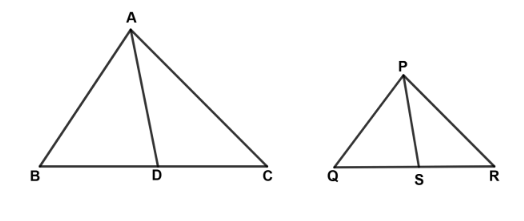
- (a)3 : 8
- (b)2 : 1
- (c)9 : 64
- (d)8 : 3
Appeared in 10 of the 11 available papers.
Appears almost every year — treat as core
Average per paper it appears in · 52 marks in total
53% of this chapter's 45 questions
35 questions carry a figure — practise drawing them
Showing 25 of 45 matching questions (52 marks).
25 questions
Choose the correct answers to the questions from the given options. (Do not copy the questions, write the correct answers only.)
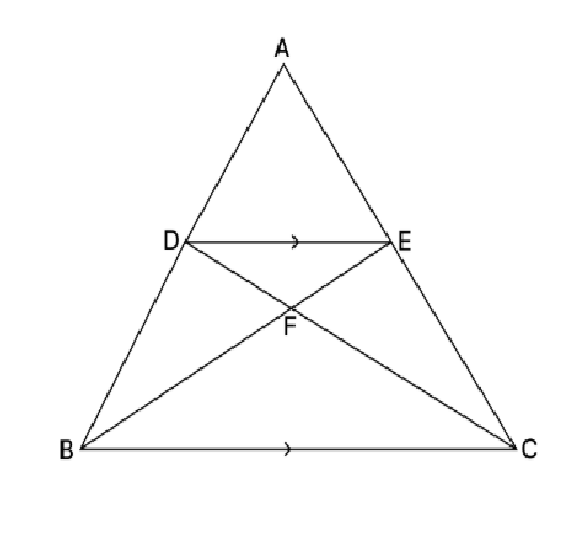
In the given diagram, DE || BC and AD : DB = 2 : 3.
Choose the correct answers to the questions from the given options. (Do not copy the questions, write the correct answers only.)
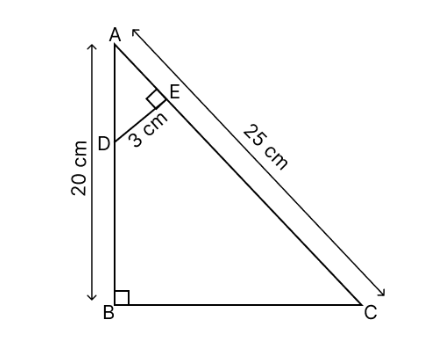
In ΔABC, ∠ABC = 90°, AB = 20 cm, AC = 25 cm, DE is perpendicular to AC such that ∠DEA = 90° and DE = 3 cm as shown in the given figure.
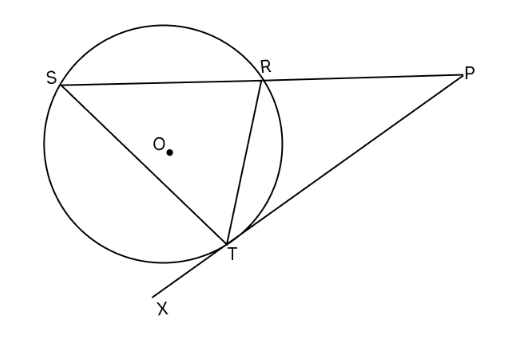
In the given diagram O is the centre of the circle. Chord SR produced meets the tangent XTP at P.
Choose the correct answers to the questions from the given options. (Do not copy the questions, write the correct answers only.)
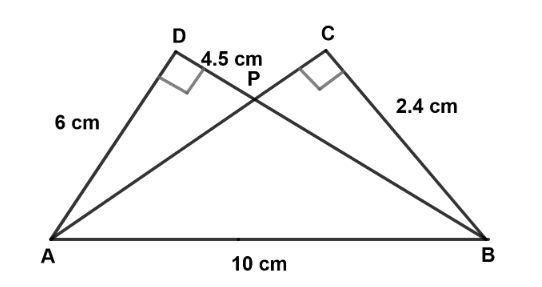
In the given diagram ∆ADB and ∆ACB are two right angled triangles with ∠ADB = ∠BCA = 90°. If AB = 10 cm, AD = 6 cm, BC = 2.4 cm and DP = 4.5 cm
Choose the correct answers to the questions from the given options. (Do not copy the questions, write the correct answers only.)
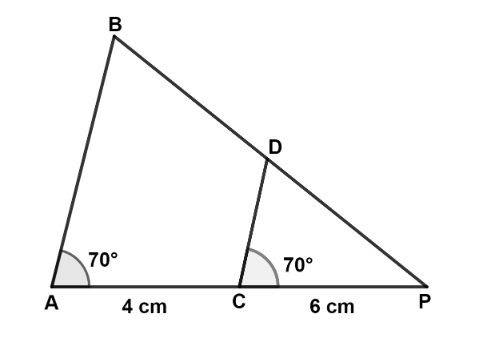
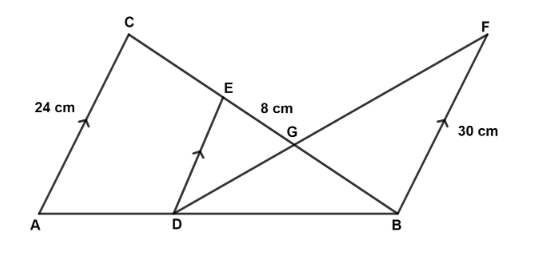
In the given figure, AC // DE // BF. If AC = 24 cm, EG = 8 cm, GB = 16 cm, BF = 30 cm.
Select the correct option for each of the following questions.
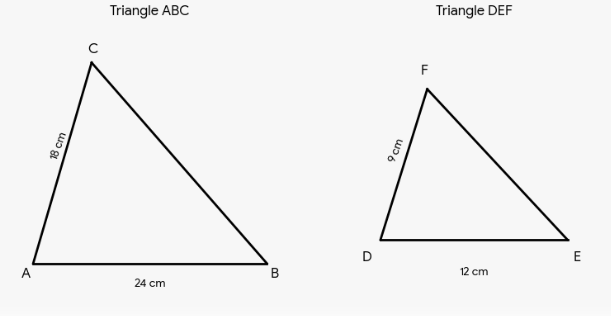
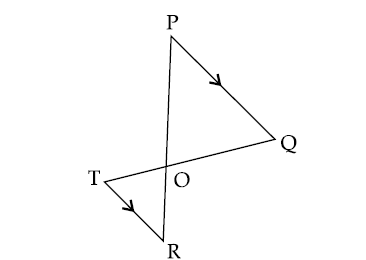
Select the correct option for each of the following questions.
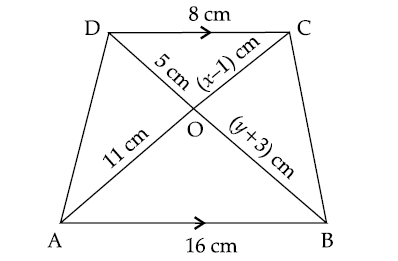
In the given figure ABCD is a trapezium in which DC is parallel to AB. AB = 16 cm and DC = 8 cm, OD = 5 cm, OB = (y +3) cm, OA = 11 cm and OC = (x – 1) cm. Using the given information answer the following questions.
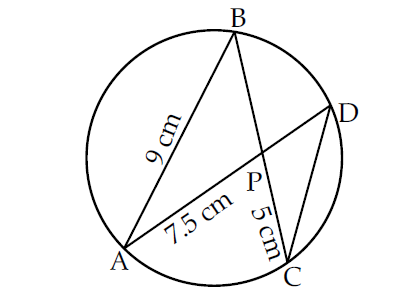
In the given figure AB = 9 cm, PA = 7.5 cm and PC = 5 cm. [3] Chords AD and BC intersect at P.