Given below is a diagram representing a stage during the mitotic cell division. Study the diagram and answer the following questions: Given below is a diagram representing a stage during the mitotic cell division. Study the diagram and answer the following questions:
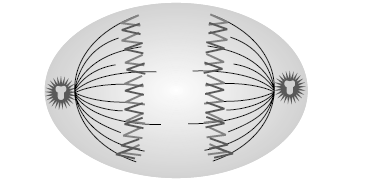
How many chromosomes will each daughter cell have after the completion of the above division?
Topic: Chromosome number after mitosis
Answer
Each daughter cell will have the SAME number of chromosomes as the parent cell — in a human cell, 46.
MITOSIS is an EQUATIONAL division: the chromosome number is UNCHANGED. Each daughter cell is genetically IDENTICAL to the parent.
WHY: the DNA was replicated during the S phase of interphase BEFORE division began, so each chromosome already consisted of two identical chromatids. Anaphase simply sends one chromatid of each pair to each pole, so each daughter receives one complete set.
THE CONTRAST with MEIOSIS, which is always worth stating:
MITOSIS — body cells; number UNCHANGED (46 → 46); TWO identical daughter cells
MEIOSIS — gamete formation; number HALVED (46 → 23); FOUR daughter cells, not identical
Mitosis is for growth and repair; meiosis is for reproduction.