The diagram given below represents an organ system in the human body. Study the same and answer the questions that follow: The diagram given below represents an organ system in the human body. Study the same and answer the questions that follow:
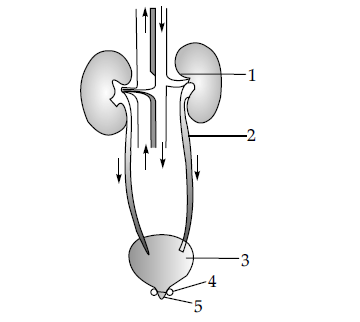
What is the fluid that accumulates in part 3? Which is the main nitrogenous waste present in it?
Topic: Urine and urea
Answer
Part 3 is the URINARY BLADDER, and the fluid accumulating in it is URINE.
The main nitrogenous waste present in it is UREA.
Both halves must be answered: the fluid AND the waste.
UREA is formed IN THE LIVER from excess amino acids. When proteins are broken down, the amino group is removed (DEAMINATION) producing highly toxic AMMONIA, which the liver at once converts into far less toxic urea for safe transport in the blood to the kidneys.
THE PATTERN worth knowing: the waste excreted depends on how much water an animal can spare. AMMONIA (most toxic, needs most water) in fishes; UREA in mammals; URIC ACID (least soluble, needs least water) in birds and insects.