Given below are diagrams showing the different stages in the process of fertilisation of an egg in the human female reproductive tract. Study the diagrams and answer the questions: Given below are diagrams showing the different stages in the process of fertilisation of an egg in the human female reproductive tract. Study the diagrams and answer the questions:
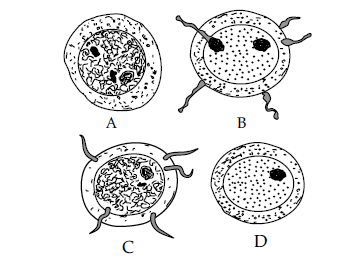
Mention the chromosome number of the egg and zygote in humans.
Topic: Chromosome number of egg and zygote
Answer
EGG (ovum): 23 chromosomes — HAPLOID ZYGOTE: 46 chromosomes (23 pairs) — DIPLOID
THE ARITHMETIC OF FERTILISATION in one line: 23 (from the ovum) + 23 (from the sperm) = 46 in the zygote.
This is precisely WHY gametes must be haploid. If each carried 46, the zygote would have 92 and the number would DOUBLE every generation. MEIOSIS halves it so that fertilisation restores exactly 46.
WRITE THE NUMBER, not the pairs, for the gamete: an ovum has 23 single chromosomes, NOT 23 pairs. That single word is the commonest error in this question — and it appears again in the 2026 paper, where the sperm nucleus is said to contain 23.
The marking scheme accepts "46" or "23 pairs" for the zygote, since a body cell may be described either way.