Given below are two stages in the evolution of man. Study them and answer the questions that follow: Given below are two stages in the evolution of man. Study them and answer the questions that follow:
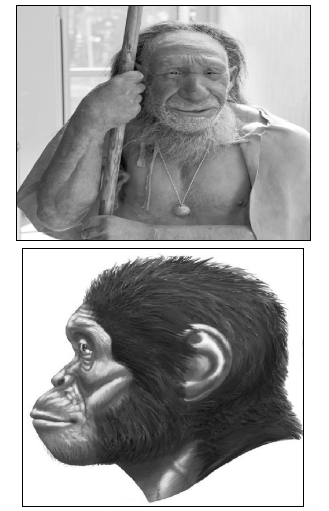
Give two examples of Vestigial organs in humans.
Topic: Vestigial organs
Answer
- The VERMIFORM APPENDIX — a small blind tube at the junction of the small and large intestine, functional in herbivorous ancestors for digesting cellulose.
- The MUSCLES OF THE PINNA — present but no longer able to move the ear, as they do in many mammals.
(Also acceptable: wisdom teeth, the coccyx or tail bone, the nictitating membrane of the eye, body hair.)
Two examples, one mark. Adding what each ORGAN ONCE DID shows you understand why it counts as vestigial.
A VESTIGIAL ORGAN is one that is REDUCED and NON-FUNCTIONAL now, but was well developed and useful in the ancestors.
WHY THEY MATTER: they are EVIDENCE FOR EVOLUTION. A structure that is useless in us but useful in a related animal makes no sense unless we share a common ancestor with that animal — which is exactly the argument they are used to support.