Given below is a diagram of a human blood smear. Study the diagram and answer the questions that follow: Given below is a diagram of a human blood smear. Study the diagram and answer the questions that follow:
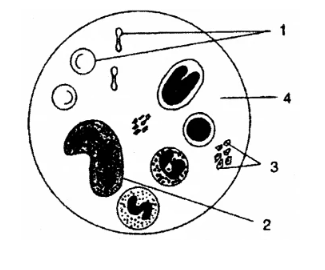
Component numbered ‘1’ do not have certain organelles but are very efficient in their function. Explain.
Topic: Efficiency of red blood cells
Answer
- The ABSENCE OF A NUCLEUS leaves more room for HAEMOGLOBIN, so each cell carries more oxygen, and it allows the BICONCAVE shape, which increases the surface area for absorbing oxygen and lets the cell bend through narrow capillaries.
- The ABSENCE OF MITOCHONDRIA means the cell does not respire aerobically, so it CONSUMES NONE OF THE OXYGEN it is carrying — the entire load is delivered to the tissues.
- The ABSENCE OF ENDOPLASMIC RETICULUM increases its FLEXIBILITY, helping it squeeze through narrow capillaries.
The question asks why the cell is efficient DESPITE these absences, so each absence must be shown to be an ADVANTAGE. That reframing is the whole point.
THE MITOCHONDRIA ARGUMENT is the most elegant and the one candidates miss: a cell whose sole job is to TRANSPORT oxygen would be a poor carrier if it burned some of the cargo on the way.
THE COST of this specialisation, worth a closing line: with no nucleus the cell cannot repair itself or divide, so it lives only about 120 days — which is exactly what part (iv) asks.