Given below is the diagram of a human heart. Read the information below the diagram and fill in the blanks. The human heart pumps blood throughout the body. It is the size of a large fist. The heart is located between the lungs in the thoracic cavity. It has four chambers. The heart functions all through the lifespan of a person and is responsible for the survival of the person.
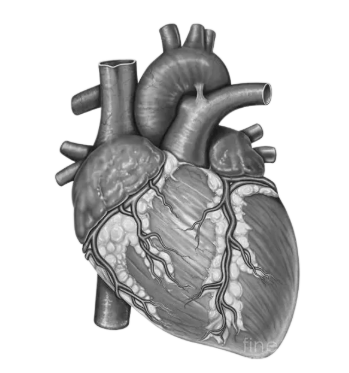
The heart is enclosed by a membrane called (a) __________. The ventricles give rise to two large blood vessels called (b) __________ and (c) __________. The flaps of the cuspid valves are kept in position by (d) __________. (e) __________ arteries supply oxygenated blood to the walls of the heart.
Topic: Structure of the human heart
Answer
(a) Pericardium (b) Aorta (c) Pulmonary artery (d) Chordae tendinae (e) Coronary
One mark per blank.
(a) PERICARDIUM — the double membrane enclosing the heart. The fluid between its layers reduces friction as the heart beats and protects it from shock.
(b) and (c) AORTA and PULMONARY ARTERY. The LEFT ventricle gives rise to the AORTA (oxygenated blood to the body); the RIGHT ventricle gives rise to the PULMONARY ARTERY (deoxygenated blood to the lungs). Either order is acceptable since the question does not specify which ventricle.
(d) CHORDAE TENDINAE — tendinous cords joining the valve flaps to the papillary muscles of the ventricle wall. Their job is to stop the valves from being turned inside out by the pressure of ventricular systole, which would let blood flow back into the atria.
(e) CORONARY arteries — the heart is a muscle and needs its own blood supply. The blood passing THROUGH its chambers does not nourish the heart wall; the coronary arteries branch from the aorta to do that. Their blockage is what causes a heart attack.
THE COMMONEST ERROR is (b) and (c): writing "pulmonary VEIN" instead of pulmonary ARTERY. Veins ENTER the atria; only ARTERIES leave the ventricles. The question says the ventricles GIVE RISE to them, so both must be arteries.