Given below are diagrams showing the different stages in the process of fertilisation of an egg in the human female reproductive tract. Study the diagrams and answer the questions: Given below are diagrams showing the different stages in the process of fertilisation of an egg in the human female reproductive tract. Study the diagrams and answer the questions:
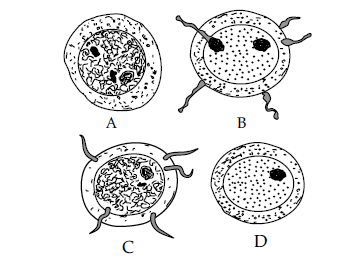
Where does fertilisation normally take place? What is ‘Implantation’ that follows fertilisation?
Topic: Site of fertilisation and implantation
Answer
Fertilisation normally takes place in the FALLOPIAN TUBE (oviduct), usually in its upper third.
IMPLANTATION is the EMBEDDING of the developing embryo (the blastocyst) IN THE THICKENED LINING OF THE UTERUS, about six or seven days after fertilisation.
Both halves must be answered: the SITE and the DEFINITION.
THE TWO EVENTS HAPPEN IN DIFFERENT ORGANS AND SEVERAL DAYS APART — a point students often blur together: FERTILISATION — in the FALLOPIAN TUBE, forming the zygote the zygote divides as it travels down, becoming a MORULA and then a BLASTOCYST IMPLANTATION — in the UTERUS, about six or seven days later
Implantation marks the true beginning of PREGNANCY, and it is why the endometrium is rebuilt each month under oestrogen and progesterone — to be ready to receive it. The placenta then develops at that point of attachment.