Write a composition (300-350 words) on any one of the following:
Study the picture given below. Write a short story or description or an account of what the picture suggests to you. Your composition may be about the subject of the picture or you may take suggestions from it.
Topic: Picture composition
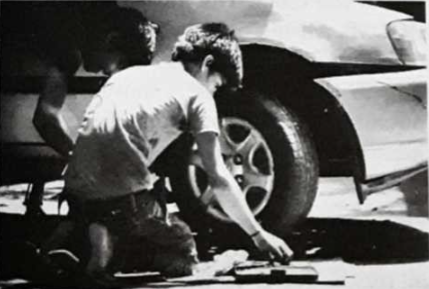
Answer
MODEL APPROACH (the composition itself depends on the picture printed in your paper)
Three requirements govern this option, whatever the image shows.
- ESTABLISH THE CONNECTION IN THE FIRST PARAGRAPH. A reader should be able to identify your picture without being told which it was.
- CHOOSE ONE FORM AND WRITE IT PROPERLY. Story, description or account — decide before you begin. A story needs situation, complication and resolution; a description needs sensory detail and an order; an account needs a sequence of events and a reflection.
- USE THE PICTURE AS A STARTING POINT, NOT A CAGE. You may "take suggestions from it", so a photograph of two men working under a car may become a story about one of them, or a description of a roadside workshop, or an account of a journey that broke down. What it may not become is a composition with no traceable link to the image.
A RELIABLE OPENING if the picture puzzles you: two or three sentences of concrete visual detail drawn from the image, then move into your narrative through one element within it — a face, an object, the weather, the light.
See the narrative, descriptive and argumentative models in the Writing Formats & Marking (Reference) chapter for the shape each form takes.
WHY THIS OPTION IS BOTH THE EASIEST AND THE RISKIEST
Easiest, because you may write in any form and can play to your strength.
Riskiest, because the composition must arise from the image. Every year candidates attach a rehearsed piece to the picture with a token reference and lose content marks for it.
Note that this year’s wording is slightly gentler than usual — it says you "may take suggestions from it" without the sentence about a clear connection that other years add. The requirement is the same in practice: the examiner must be able to see where your composition came from.
TEST BEFORE YOU BEGIN: state in one sentence how your composition arises from the picture. If you cannot, choose another option. FORMAT AND MARKS DIVISION: see "Composition — grade bands and marking" in the Writing Formats & Marking (Reference) chapter, along with the worked model for this composition type.
USE THIS AS A MODEL, NOT AS AN ANSWER TO MEMORISE. The question asks for an ORIGINAL composition, and every year examiners identify scripts reproduced from guide books; a memorised answer can be penalised for plagiarism and will in any case read as borrowed. Study this piece for its STRUCTURE — how it opens, how the paragraphs are ordered, where the required tasks are answered, how it ends — and then write your own, about your own school, your own family, your own town. Your own specific detail is worth more marks than anyone else’s polished sentence.