The diagram below represents a process in plants (a leafy shoot in a flask of water with a layer of oil on top, the whole standing on a weighing machine). The setup was placed in bright sunlight. Answer the following questions: The diagram below represents a process in plants (a leafy shoot in a flask of water with a layer of oil on top, the whole standing on a weighing machine). The setup was placed in bright sunlight. Answer the following questions:
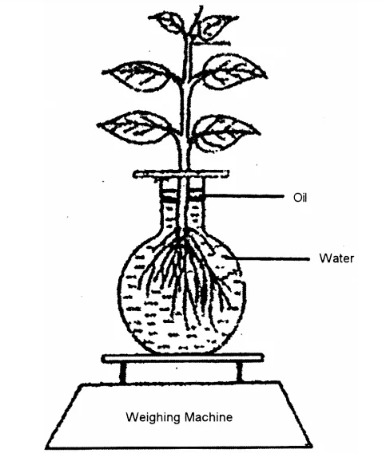
Mention any three adaptations found in plants to overcome the process mentioned in (i).
Topic: Adaptations to reduce transpiration
Answer
- SUNKEN STOMATA — the stomata lie in pits below the surface, where moist air is trapped.
- FEWER STOMATA, and a THICK WAXY CUTICLE on the leaves.
- NARROW or REDUCED LEAVES, modified into SPINES (as in cactus), or leaves rolled and folded.
(Also acceptable: hairy leaf surfaces, loss of leaves in the dry season, multiple epidermis.)
THREE are asked for, so give exactly three, and for each say what it achieves.
THE PRINCIPLE behind almost all of them: evaporation slows when the air immediately outside the stoma is ALREADY MOIST, or when there is less exposed surface. Sunken pits, surface hairs and rolled leaves all work by trapping a layer of humid air against the leaf; narrow leaves and spines work by reducing surface area.
These are XEROPHYTIC adaptations, found in plants of dry habitats — which is why desert plants have SMALL, THICK, reduced leaves, and not the "large thin leaves" that the 2026 paper’s assertion-reason question wrongly claims.