The following diagram demonstrates a physiological process taking place in green plants (a funnel and test tube inverted over Hydrilla in a beaker of water). The whole set up was placed in bright sunlight for several hours. Study the diagram and answer the questions that follow: The following diagram demonstrates a physiological process taking place in green plants (a funnel and test tube inverted over Hydrilla in a beaker of water). The whole set up was placed in bright sunlight for several hours. Study the diagram and answer the questions that follow:
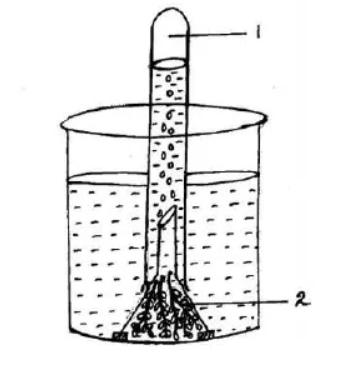
What would happen to the rate of bubbling of the gas if a pinch of sodium bicarbonate is added to the water in the beaker? Explain your answer.
Topic: Effect of sodium bicarbonate
Answer
The rate of bubbling would INCREASE.
Sodium bicarbonate RELEASES CARBON DIOXIDE into the water, making more of it available to the plant. Since carbon dioxide is a raw material of photosynthesis and was the factor limiting the rate, the rate of photosynthesis rises, more oxygen is produced, and the bubbles come faster.
State the DIRECTION and then the REASON. The reason must trace the chain: more carbon dioxide → faster photosynthesis → more oxygen → more bubbles.
THE CONCEPT BEHIND IT is the LAW OF LIMITING FACTORS: the rate of photosynthesis is set by whichever requirement is in SHORTEST supply. In a beaker of water in bright sunlight, light is plentiful and water is everywhere — so the scarce factor is CARBON DIOXIDE. Supply more of it and the rate rises immediately.
That also tells you what would NOT help: adding more water, or more light once light is already abundant, would change nothing, because neither was the limiting factor.
It is the same principle a grower uses when enriching a greenhouse with carbon dioxide to increase crop yield.