The diagram of an apparatus given below demonstrates a particular process in plants. Study the same and answer the questions that follow: The diagram of an apparatus given below demonstrates a particular process in plants. Study the same and answer the questions that follow:
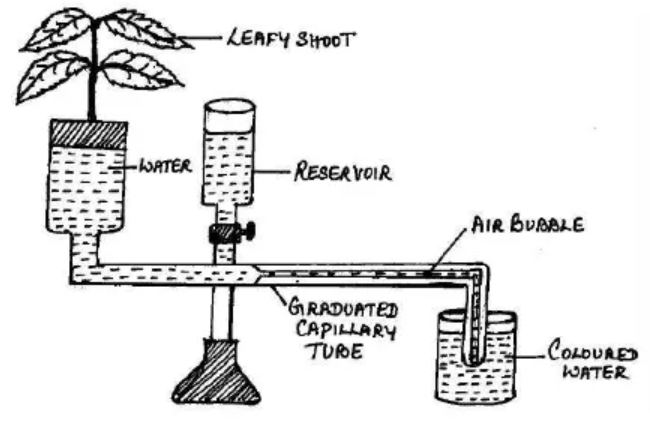
Explain the phenomenon mentioned in (ii) above.
Topic: Definition of transpiration
Answer
TRANSPIRATION is the loss of water in the form of WATER VAPOUR from the AERIAL parts of a plant — mainly through the stomata of the leaves, and to a smaller extent through the cuticle and the lenticels.
Two elements must appear: the water is lost as VAPOUR, and from the AERIAL parts.
VAPOUR distinguishes it from GUTTATION, which gives liquid DROPS through hydathodes — the very phenomenon asked about in Question 2(a)(iv) of this same paper.
AERIAL rules out the roots, which ABSORB water rather than losing it, and is why "all parts of the plant" is a wrong definition.
Transpiration is sometimes called a NECESSARY EVIL: the plant loses enormous quantities of water, but the loss is unavoidable, since the stomata must open to admit carbon dioxide for photosynthesis and water escapes through the same pores.